Travel and culture
Łódź, a city of factories and palaces: a day discovering another Poland
In Łódź, red brick and monumental façades tell two sides of the same industrial story. Here is a day between Księży Młyn and the Poznański family palace, with time to observe and understand.
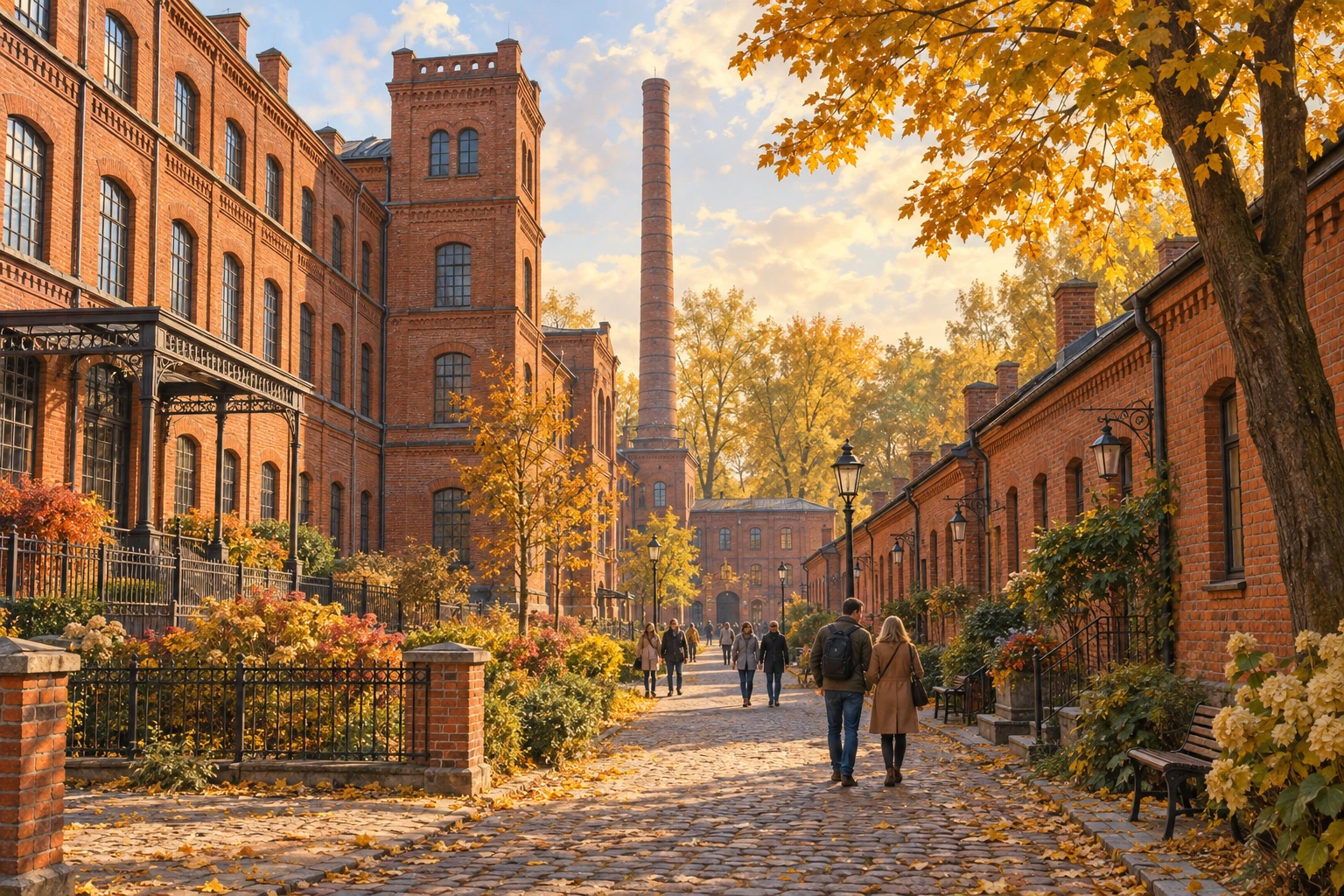
Original AI-generated illustration: an artistic interpretation inspired by Księży Młyn. Details are not an exact architectural record.
Heritage to discover in the streets
This route suggests looking at Łódź through its textile heritage. Former factories, workers’ houses and industrialists’ residences give the stay a common thread. The visit is not limited to entering a museum: it also begins before a façade, in a brick street or in a courtyard.
Our suggestion combines two distinct areas, with travel between them to allow for. Choose one major indoor visit and keep the rest of the day for walks. In October, alternating outdoor exploration and a museum makes it possible to adapt to rain.
Morning: Księży Młyn, a city within the city
The tourist office describes Księży Młyn as Łódź’s largest historic industrial complex from the second half of the 19th century. Around the production buildings, the neighbourhood preserves the memory of a place combining work, housing and everyday facilities.
Take time to explore publicly accessible streets and observe workers’ houses, the scale of former factories and the organisation of the neighbourhood. The proximity between workplaces and homes makes the walk interesting. Converted buildings are not all open to visitors: respect residential areas and private entrances.
Our morning suggestion: a walking circuit, a few stops to understand the neighbourhood and a break before reaching the second area. If you want a guide or a local museum visit, check opening times, language and bookings separately.
Textile history: looking at places without idealising them
The juxtaposition of workers’ housing and sumptuous residences invites questions about differences in living conditions in the industrial city. For visitors, this contrast provides an angle of interpretation without claiming to summarise everyone’s past experiences.
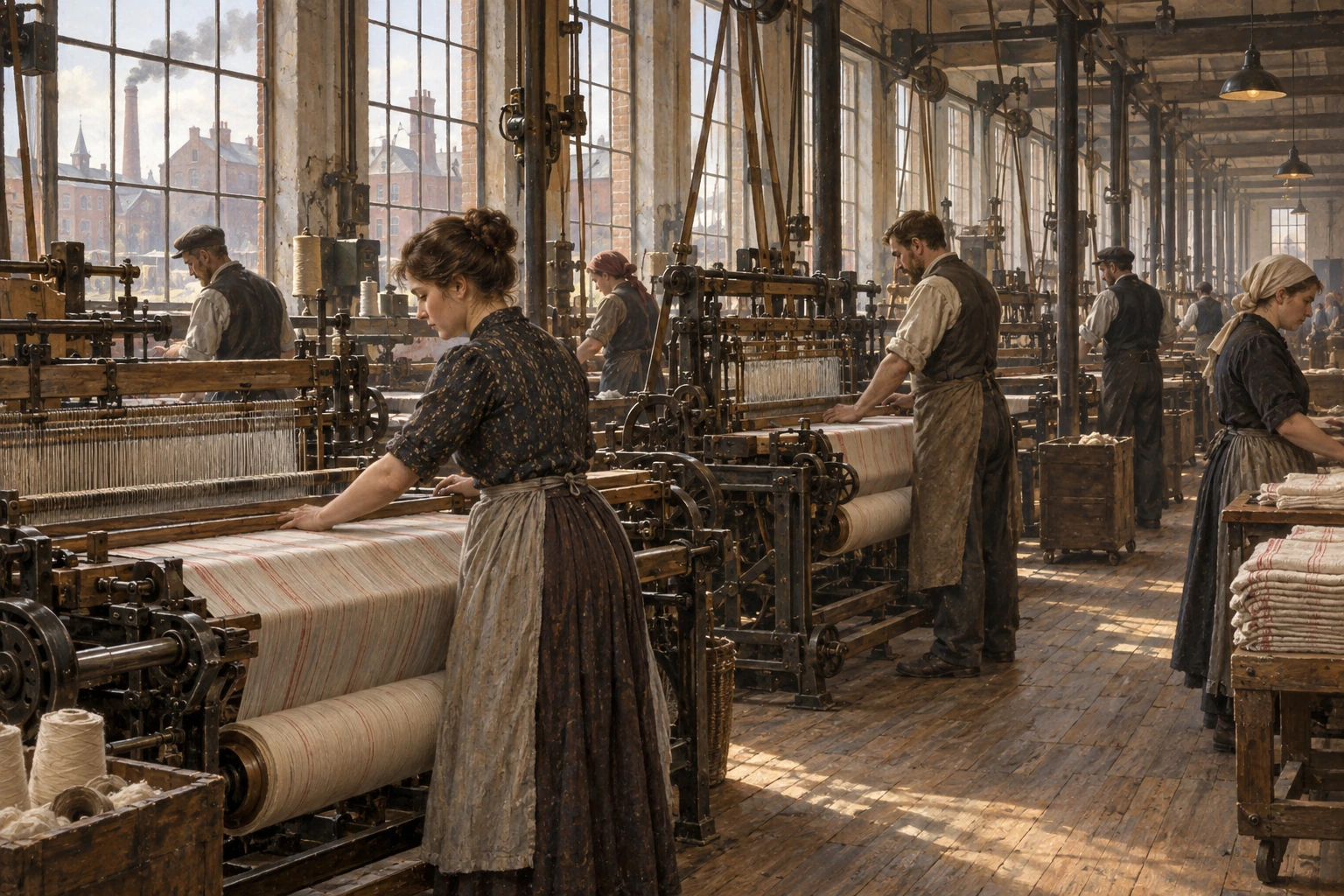
The workshop illustration is an imagined evocation of textile work in the late 19th century. It reproduces neither an old photograph nor an identified workshop. To explore textile history through objects and collections, plan a dedicated visit to the Central Museum of Textiles on an additional day.
Afternoon: the Poznański family palace
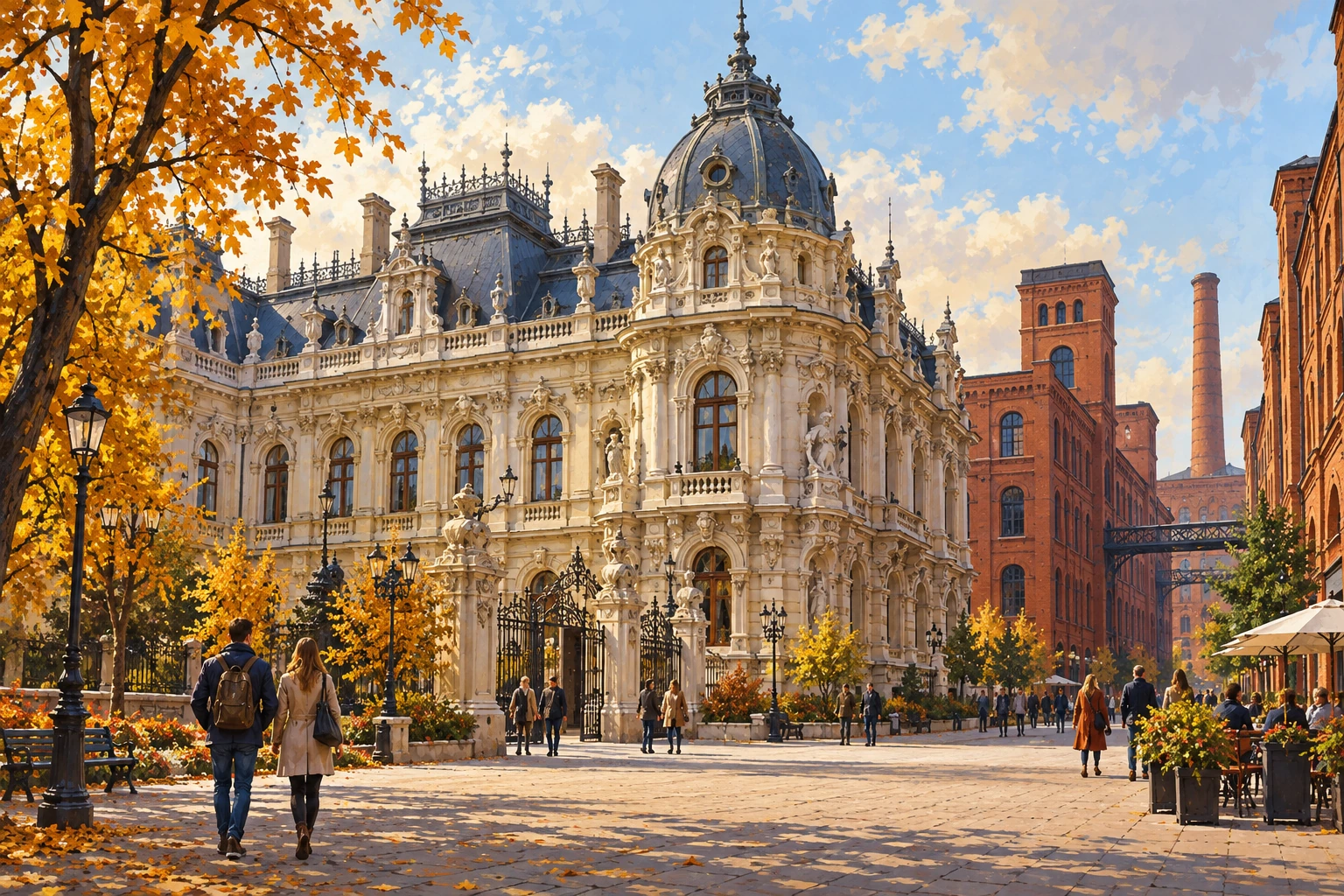
The palace at 15 Ogrodowa Street houses the Museum of the City of Łódź. Its official website advertises restored palace interiors and exhibitions about the Poznański family, the city and its residents. After the industrial streets, this stop changes the scale and setting of the visit.
The museum advertises opening Tuesday to Thursday from 9:00 to 17:00 and Friday to Sunday from 11:00 to 19:00; it is closed on Monday. Final admission is 45 minutes before closing. Free admission to permanent exhibitions is advertised on Wednesday; this does not mean every temporary exhibition is free.
For a late-month stay, note that the palace announces closure from 27 to 31 October 2026. On those dates, keep an outdoor walk as an option and choose another indoor visit after checking. Do not purchase a programme dependent on palace admission during those days.
Finish the day without multiplying journeys
Near the palace, former industrial buildings and the Manufaktura area let you continue exploring the brick landscape. Leave room for a break and free time rather than hurriedly scheduling a third museum.
If you want to continue towards Piotrkowska, check a route suited to your energy and return time. This day is a flexible suggestion: its success depends more on time spent observing than on the number of stops completed.
Prepare your visit: transport, language and weather
Księży Młyn and the palace are not a single site. Allow travel time between them and consult public transport information for your date. Routes and timetables can change: use stops matching the actual starting point of your walk.
For guided visits, check the language offered before booking. A website with a French or English page does not guarantee a spoken tour in that language. Also check entry conditions and accessibility for your chosen route.
Our recommended programme: Księży Młyn in the morning, a break and transfer, then the palace in the afternoon when it is open. If rain sets in, shorten outdoor exploration; if visiting from 27 to 31 October, replace the palace with an activity whose opening is confirmed.