News in brief
Poland, Sunday evening: Kamieńczyk closure, Vietnam talks and a chemistry robot
Since our morning edition, the Karkonosze park has clarified the storm’s consequences for visitors. Reporting also covers industrial discussions with Vietnam and highlights Polish research into automated chemistry experiments. Three points to remember this 25 October.

Original AI-generated illustration: an imaginary gorge and footbridge. It shows neither actual conditions at Kamieńczyk nor a usable access route.
Karkonosze: the Kamieńczyk gorge closed this Sunday
Following the warnings covered this morning, a concrete measure affects visitors: the Karkonoski Park Narodowy bulletin consulted this Sunday states that the Kamieńczyk gorge is closed because of strong winds and gusts. In its report published at 1.06 pm, RMF24 also describes the closure of the walkways and risks from broken trees.
The park advises against mountain excursions in these conditions and stresses the danger of falling branches and trees. This updates our morning edition; it does not mean the whole park has the same closure status. Before any later journey, reread the bulletin and official map: reopening cannot be inferred simply because the date has changed.

Vietnam: industrial discussions, not contracts already announced as signed
In a statement to PAP reported on Sunday, Deputy State Assets Minister Konrad Gołota discusses talks with Vietnam on defence equipment, including Rosomak vehicles, Krab howitzers and coastal protection. He suggests first contracts could be announced in December while considering it premature to put a value on possible orders.
The prime minister’s official programme schedules talks in Hanoi and a document-signing session for Monday 26 October. This diplomatic timetable does not prove that the commercial contracts mentioned have already been concluded. The issue to follow is therefore whether these exchanges become precise commitments, with their nature and value, when actually made public.
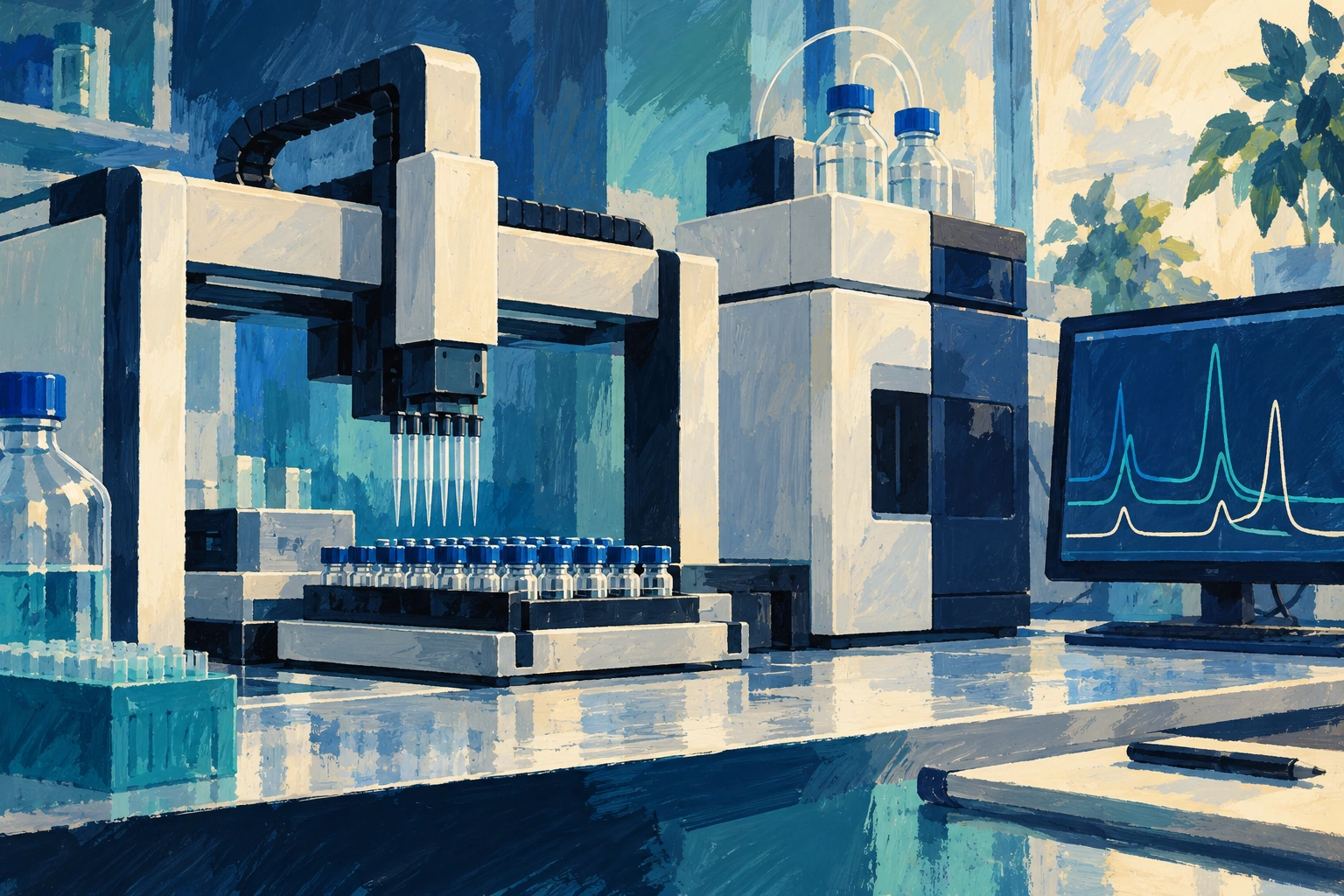
Research: a Polish robot explores new chemical reactions
On 25 October, Nauka w Polsce presents a system from the Polish Academy of Sciences’ Institute of Organic Chemistry in Warsaw. Combining robotics and reinforcement learning, it runs experiments and uses the results to choose subsequent tests. The study describes four highly enantioselective chemical transformations, favouring one of a molecule’s mirror-image forms.
The date matters: the scientific paper appeared in Nature Communications on 13 October; Sunday’s press coverage brings the work back into the news. It is a methodological advance within a defined reaction space, not the announcement of a medicine or a machine capable of replacing all chemistry research.