Travel in Poland
Travelling in Eastern Poland: What You Need to Know About the Borders
Following a Russian attack near the Polish-Ukrainian border, the Polish authorities have increased their vigilance. Here is the practical information travellers need, without unnecessary alarm.
Last checked: 16 September 2026.
Key information
Polish airspace was not violated during the incident on 13 September. At the time of the government statement, the authorities reported that traffic at the border crossings with Ukraine was continuing normally. However, local disruptions were still being reported at Medyka and Dołhobyczów. A restricted zone also remains in force near the Belarusian border. Travellers should check official information immediately before departure.
What happened near the Ukrainian border?
On 13 September 2026, a Russian attack struck a petrol station, or its immediate surroundings, as well as a freight train standing on a siding in Ukraine, approximately two kilometres from the Polish border.
Following the attack, the Polish government convened a security briefing at the Government Centre for Security. Some services were placed on heightened alert, particularly around the border crossings with Ukraine.
According to the official statement, Polish airspace was not violated. The Border Guard also reported that the situation at the crossings with Ukraine was under control and that traffic was moving normally at the time of the statement.
Beware of unconfirmed reports
More alarming claims circulated in the media and on social networks. Some reports alleged that a passenger train operating between Kyiv and Warsaw had been attacked.
The Polish government stated that it was unable to confirm those claims. Only the attack near the petrol station and the strike involving freight railway equipment were officially confirmed. A dramatic claim shared on social media should therefore not automatically be treated as verified information.
Local disruptions at Medyka
On 15 September, Poland’s official border information portal reported possible disruption to freight traffic entering Poland at Medyka. A temporary suspension of checks on coaches entering Poland had also been announced there on 10 September. Works at the Dołhobyczów crossing may cause additional delays.
As the situation may change quickly, passengers travelling by coach or crossing the border should confirm their journey with the operator and consult granica.gov.pl on the day of departure.
Can you still travel in eastern Poland?
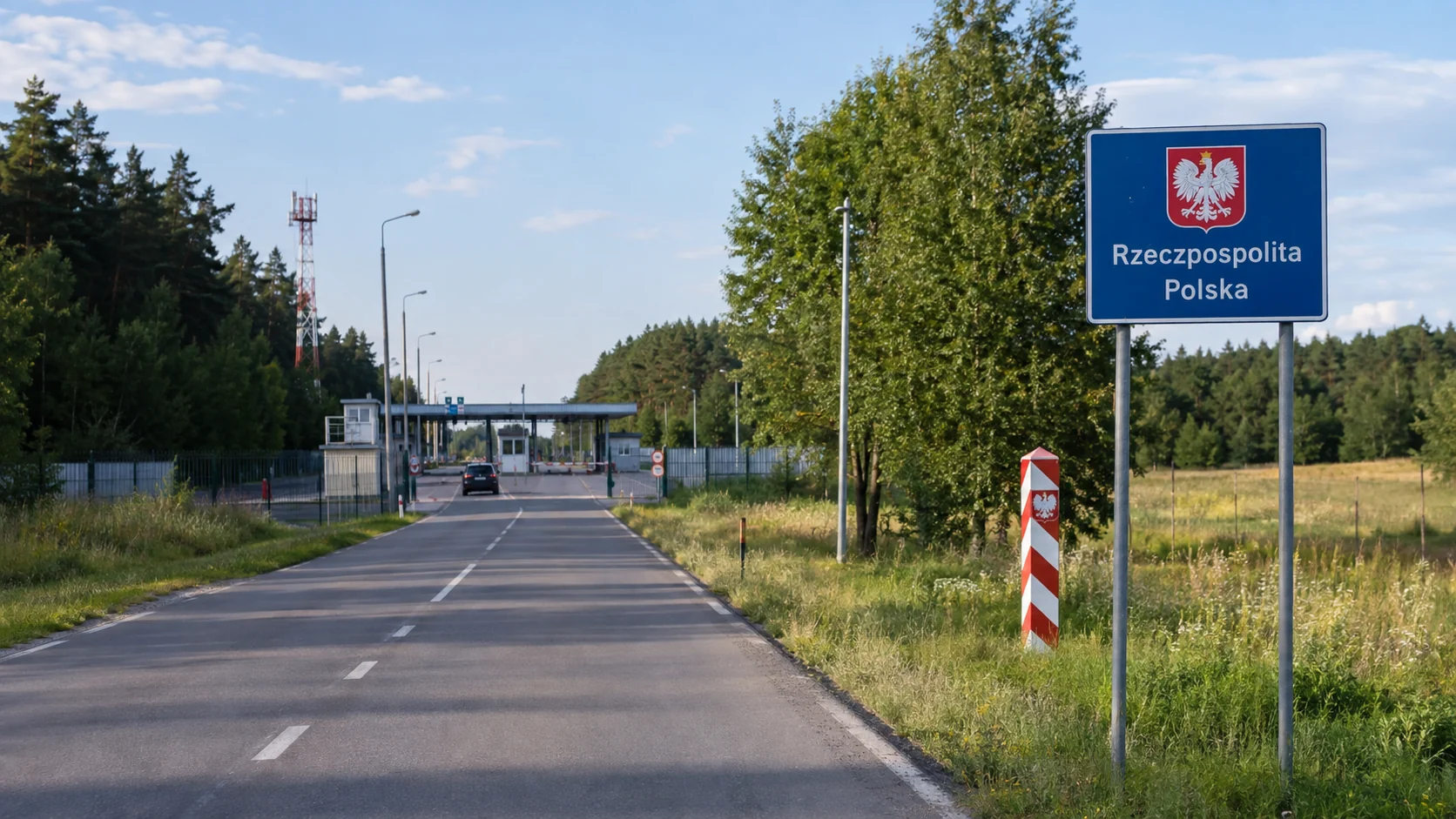
No general official recommendation prohibits ordinary travel to eastern Polish cities such as Lublin, Rzeszów or Białystok. The situation is different for people planning to cross the Ukrainian border or travel directly alongside the Belarusian border. Checks, restrictions and traffic conditions in these areas may change at short notice.
Before departure, check the selected border crossing and your operator’s notices, allow extra time for possible enhanced checks, keep your travel documents readily available and follow instructions issued by the Border Guard and local authorities.
A restricted zone near Belarus
A buffer zone remains in force along part of the border between Poland and Belarus until 29 November 2026. It covers more than 78 kilometres within the areas administered by Border Guard posts in Michałowo, Narewka, Białowieża, Dubicze Cerkiewne and Czeremcha.
Along most of this section, the restricted zone extends approximately 200 metres from the border. In some protected natural areas, it may extend for two kilometres, and for approximately four kilometres inland along a shorter section.
This does not mean that the whole Białowieża Forest or every nearby town and village is closed. However, certain roads and trails immediately beside the border may be inaccessible. When visiting Białowieża Forest, remain on authorised routes and check information issued by the national park or your local guide. Do not bypass border signs, even if an older route is still displayed by a navigation application.
Where should you check the latest information?
Before travelling towards Poland’s eastern border, consult granica.gov.pl for information about crossings, disruptions and waiting times. You should also check notices from the Polish Border Guard, gov.pl and the Government Centre for Security, as well as information supplied by your railway or coach operator.
In an emergency in Poland, call 112.
This article will be updated if traffic conditions or restrictions change. Border information may change quickly, so always consult official sources before travelling.