Driving in Poland
Driving in Poland: Increased Checks and the Speed Limits You Need to Know
Polish police are conducting nationwide speed checks on 17 September. Here are the essential rules for driving in Poland without an unpleasant surprise.
Last checked: 17 September 2026.
Nationwide checks on 17 September
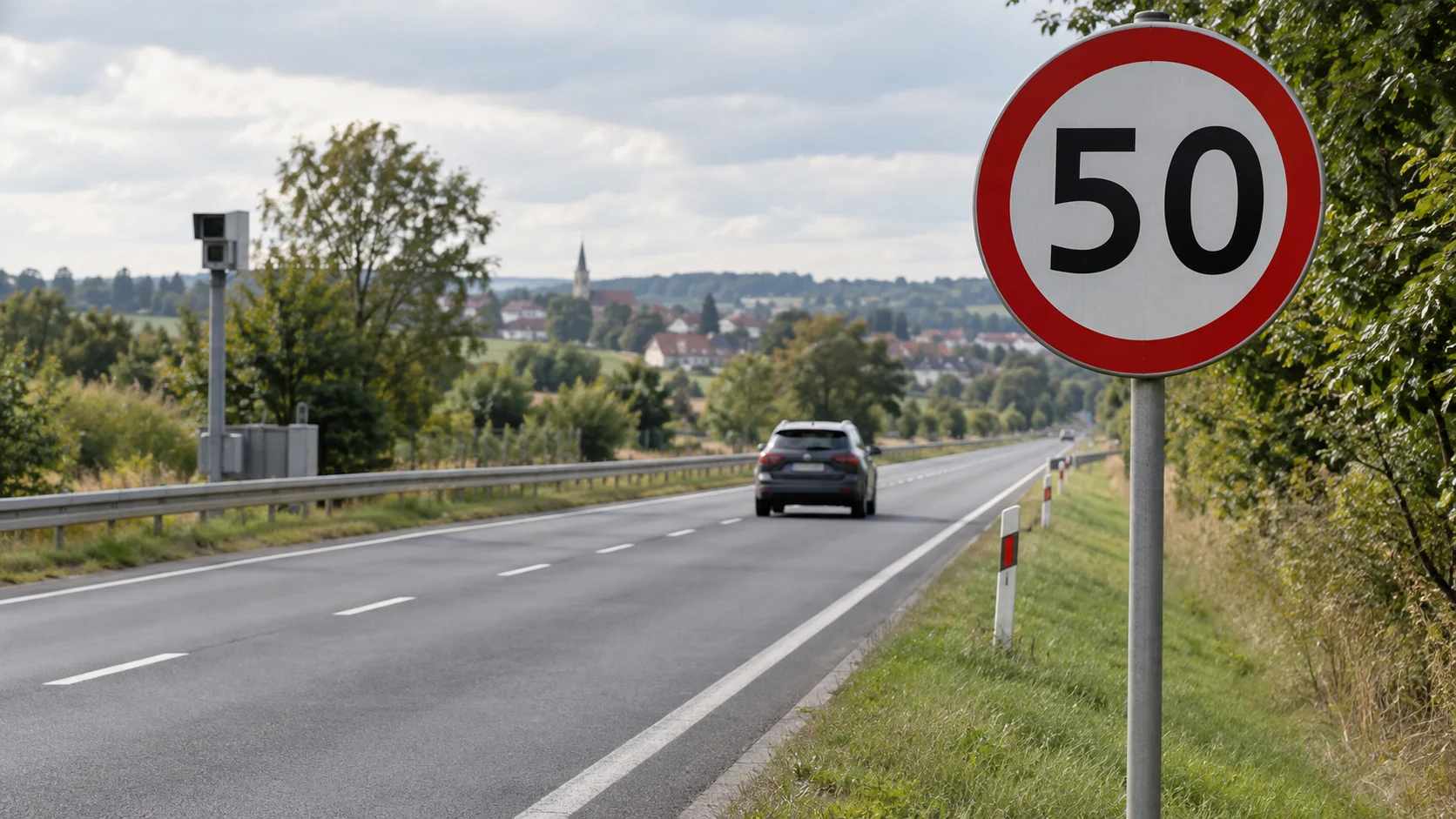
On Thursday 17 September, Polish police are conducting a nationwide operation called “PRĘDKOŚĆ”, meaning “speed”. Officers are using both stationary and mobile measurements, with particular attention to locations where excessive speed frequently contributes to collisions.
Specialist SPEED police teams are also taking part. Although speeding is the stated priority, officers may act on any other offence they observe, including handheld phone use, dangerous overtaking, failure to give way, failure to wear a seat belt or driving under the influence of alcohol.
The operation forms part of ROADPOL Safety Days, held from 16 to 22 September 2026. ROADPOL designated 17 September as a European target day with no road fatalities.
General limits for a passenger car
Road signs always take priority. Unless a different limit is displayed, the main maximum speeds for a passenger car or vehicle weighing up to 3.5 tonnes are:
• 20 km/h in a signed residential zone, or “strefa zamieszkania”;
• 50 km/h in a built-up area;
• 90 km/h on an ordinary road outside a built-up area;
• 100 km/h on a single-carriageway expressway;
• 100 km/h on a dual carriageway with at least two lanes in each direction;
• 120 km/h on a dual-carriageway expressway;
• 140 km/h on a motorway.
The Polish word “autostrada” means motorway, while “droga ekspresowa” means expressway. Expressways are identified by a green sign carrying the letter S and a number, such as S7.
Why your navigation app is not enough
The speed shown by a navigation application may be outdated or incorrect. Temporary limits are frequently introduced near roadworks, collisions or hazardous sections. The sign displayed on the road therefore takes priority over the application.
Drivers must also adapt their speed to actual conditions. Rain, fog, snow, heavy traffic or poor visibility may require driving well below the posted maximum.
A stricter rule since March 2026
Since 3 March 2026, exceeding the speed limit by more than 50 km/h can result in a three-month driving-licence suspension not only in built-up areas, but also on ordinary single-carriageway, two-way roads outside built-up areas.
Police state that the suspension is mandatory when the statutory conditions are met. A foreign driver should not assume that a licence issued by another country removes the consequences of an offence committed in Poland.
Driving a rental car
The driver of a rental car remains responsible for complying with speed limits. If an offence is recorded by an automatic camera, the rental company may provide the driver’s details to the authorities and charge an administration fee under the rental agreement.
Before setting off, check the vehicle documents and equipment, the rental terms and the assistance number. Do not handle a phone while driving: set the route before departure or ask a passenger to manage the navigation.
Good habits for a journey in Poland
Follow the signs, slow down as soon as you enter a built-up area, maintain a safe distance and allow extra time instead of attempting to recover a delay by speeding. On motorways and expressways, watch for temporary limits and variable-message signs.
For current disruption on national roads, consult the GDDKiA road-information map. In an emergency in Poland, call 112.
The nationwide operation was announced for 17 September 2026, but the limits and safety rules in this guide remain relevant after the operation ends. Rules and signs may change, so consult official information before a long journey.